Discretion by Design: The Sophisticated Security Features Defining Park City's Most Private Luxury Estates
There is a particular irony embedded in the appeal of Park City for the ultra-high-net-worth buyer. The destination's charm is rooted, in part, in its relative informality — the sense that one can walk Main Street without the full apparatus of celebrity life intruding. And yet, for a growing number of buyers acquiring properties in the $8 million to $25 million range, the purchase decision is driven as much by the infrastructure of privacy and security as by any other consideration.
This is not a fringe phenomenon. Real estate professionals operating at the top of the Park City market report that security-related requirements — ranging from gated access and biometric entry systems to purpose-built safe rooms and encrypted residential networks — are appearing with increasing frequency in buyer briefs. Understanding this trend, and how the market is responding to it, offers meaningful insight into the future trajectory of Park City's highest-value properties.
Why Park City, and Why Now?
The question of why Park City has become a destination of choice for privacy-conscious, high-profile buyers is worth examining directly. Traditional celebrity enclaves — Aspen, the Hamptons, Malibu — carry a certain visibility cost. The presence of paparazzi culture, the concentration of recognizable faces, and the well-documented social scenes in these markets can make genuine privacy difficult to achieve regardless of the quality of one's security systems.
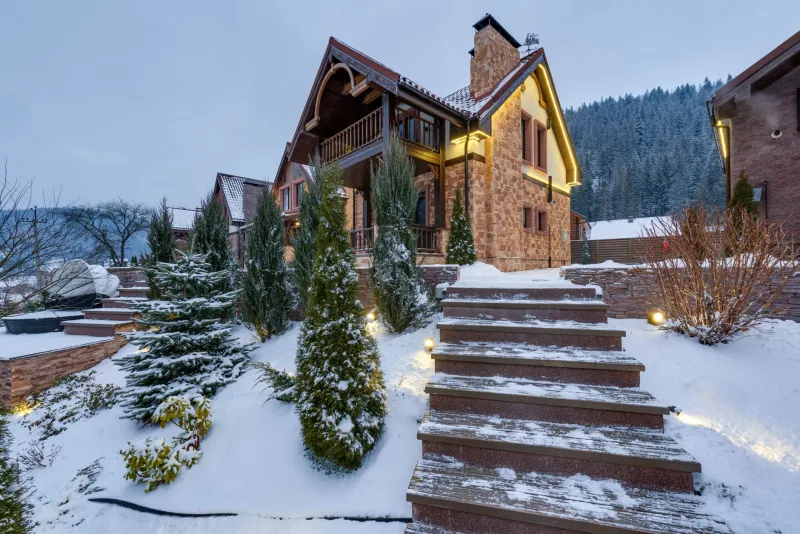
Park City offers a different proposition. Its population is smaller, its culture less oriented toward celebrity observation, and its physical geography — with sprawling hillside lots, mature tree lines, and winding access roads — naturally accommodates the kind of visual separation that privacy-seeking buyers require. The presence of Deer Valley Resort, which has long cultivated a reputation for discretion among its clientele, has established a cultural norm of respecting the privacy of prominent guests and residents that extends, to a meaningful degree, into the broader community.
The post-pandemic expansion of remote work arrangements has also contributed to this trend. Executives, entertainers, and entrepreneurs who no longer need to anchor their primary residence to a specific city have, in some cases, restructured their living arrangements such that a Park City property functions as a genuine full-time or primary-adjacent residence rather than a vacation escape. With that elevated level of occupancy comes a corresponding elevation in security requirements.
The Architecture of Privacy: What Today's Buyers Are Requesting
The security features appearing in luxury Park City listings and buyer specifications span a wide spectrum of sophistication and cost.
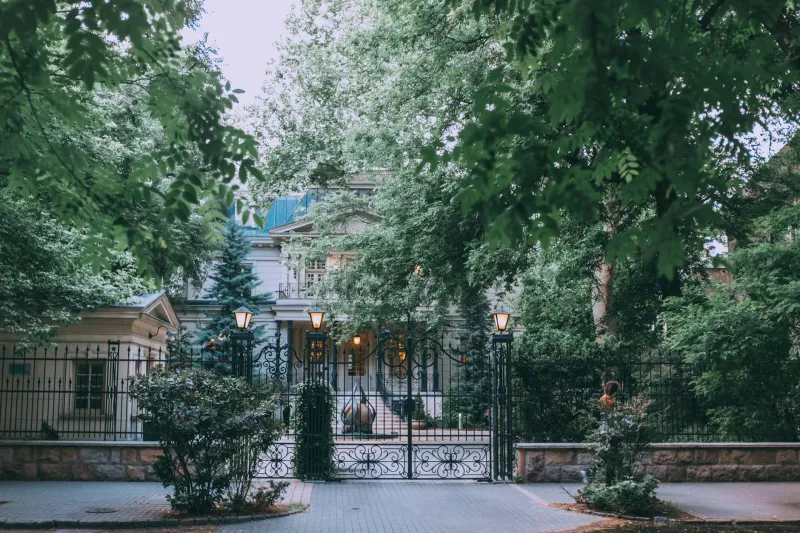
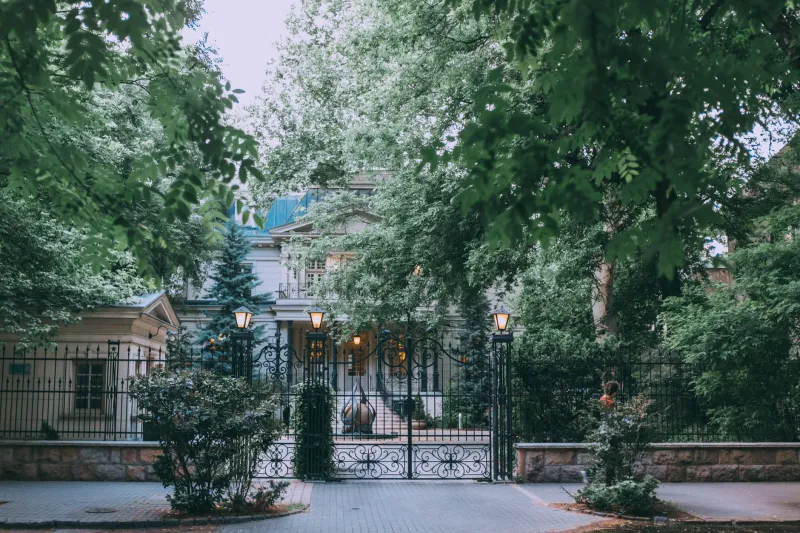
At the foundational level, buyers are requesting perimeter control that goes beyond standard fencing. Automated gate systems with license plate recognition, intercom infrastructure with remote video access, and landscape design that incorporates natural barriers — strategic boulder placement, dense evergreen plantings, grade changes — without compromising the aesthetic character of the property are baseline expectations for this buyer segment.
Entry systems have evolved considerably. Biometric access — fingerprint, retinal, and facial recognition — is increasingly standard in properties targeting this demographic, replacing or supplementing traditional keypad systems that can be compromised by observation or social engineering. Some properties incorporate multi-factor authentication for primary entry points, requiring both biometric confirmation and a secondary credential for access during specified hours or conditions.
Network security infrastructure, while invisible to the casual observer, represents one of the most significant areas of investment in this category. High-net-worth buyers with sensitive business communications, proprietary financial information, or personal data concerns are requesting residential networks built to commercial security standards — encrypted mesh systems, dedicated server infrastructure, and in some cases, Faraday shielding for specific rooms intended for confidential communications. The ability to conduct a board call, a legal consultation, or a sensitive negotiation from a Park City residence without concern for network interception is a genuine requirement for a meaningful segment of this buyer pool.
Safe Rooms and Hardened Spaces: Balancing Function and Aesthetics
The safe room — referred to with varying degrees of euphemism as a "secure room," "hardened space," or, in the most discreet marketing language, simply a "private retreat" — represents perhaps the most architecturally interesting challenge in this category of home design.
The functional requirements are well-established: reinforced walls and door assemblies, independent air filtration, dedicated communication systems, emergency power, and sufficient supplies for an extended period of occupancy. The design challenge is integrating these requirements into a luxury residence without creating a space that feels institutional, incongruous, or — perhaps most importantly for resale purposes — alarming to a future buyer who may not share the original owner's security concerns.
Architects and interior designers working in this space have developed approaches that address this tension effectively. Safe rooms concealed behind full-height bookshelves, wine storage walls, or custom millwork installations are well-documented solutions. More sophisticated implementations integrate the secure space into the home's primary suite or home office as a seamlessly appointed room that functions as a conventional living space in ordinary circumstances and a hardened refuge when required.
The cost of a properly engineered safe room installation in a Park City luxury property ranges considerably depending on scope, but industry professionals indicate that a fully specified implementation — including structural reinforcement, communications infrastructure, and interior finishes consistent with the surrounding residence — typically represents an investment in the $150,000 to $400,000 range.
Marketing Discretion as a Feature
One of the more nuanced aspects of this market segment is the manner in which security features are — and are not — disclosed in property marketing. Listing a home as containing a panic room or identifying the specific nature of its security infrastructure in public-facing marketing materials creates an obvious paradox: the very disclosure undermines the discretion that motivated the installation.
Experienced agents working with security-conscious sellers have developed protocols for navigating this tension. Security features may be disclosed selectively to qualified buyers under non-disclosure agreements prior to property tours, presented in detail during private showings rather than in listing documents, or described in generalized terms — "comprehensive security infrastructure" or "fully integrated smart home security" — that convey the category of investment without specifying its components.
For buyers, this means that the most security-forward properties in the Park City market are frequently not the most prominently marketed. Access to this inventory often requires working with an agent who has established relationships within this specific segment of the market and who is known to represent buyers whose profiles and intentions have been appropriately vetted.
The Value Proposition of Privacy
The financial implications of premium security infrastructure in Park City luxury real estate are nuanced. Properties with extensive, well-integrated security features do not universally command premiums over otherwise comparable homes — in part because the buyer pool for whom these features are relevant is narrower than the broader luxury market.
However, within that specific buyer pool, the presence of sophisticated security infrastructure can be a decisive factor in both the purchase decision and the price a buyer is willing to pay. For a buyer whose privacy requirements are genuine and non-negotiable, the cost of retrofitting a property that lacks appropriate infrastructure — a process that is invariably more disruptive and expensive than original installation — is a meaningful consideration that can justify a premium for a property that arrives fully equipped.
As Park City continues to attract a more prominent and privacy-sensitive resident base, the integration of security thinking into luxury residential design is less a niche specialty and more an emerging standard — one that reflects the evolving expectations of the market's most consequential buyers.